Interview: Miasme
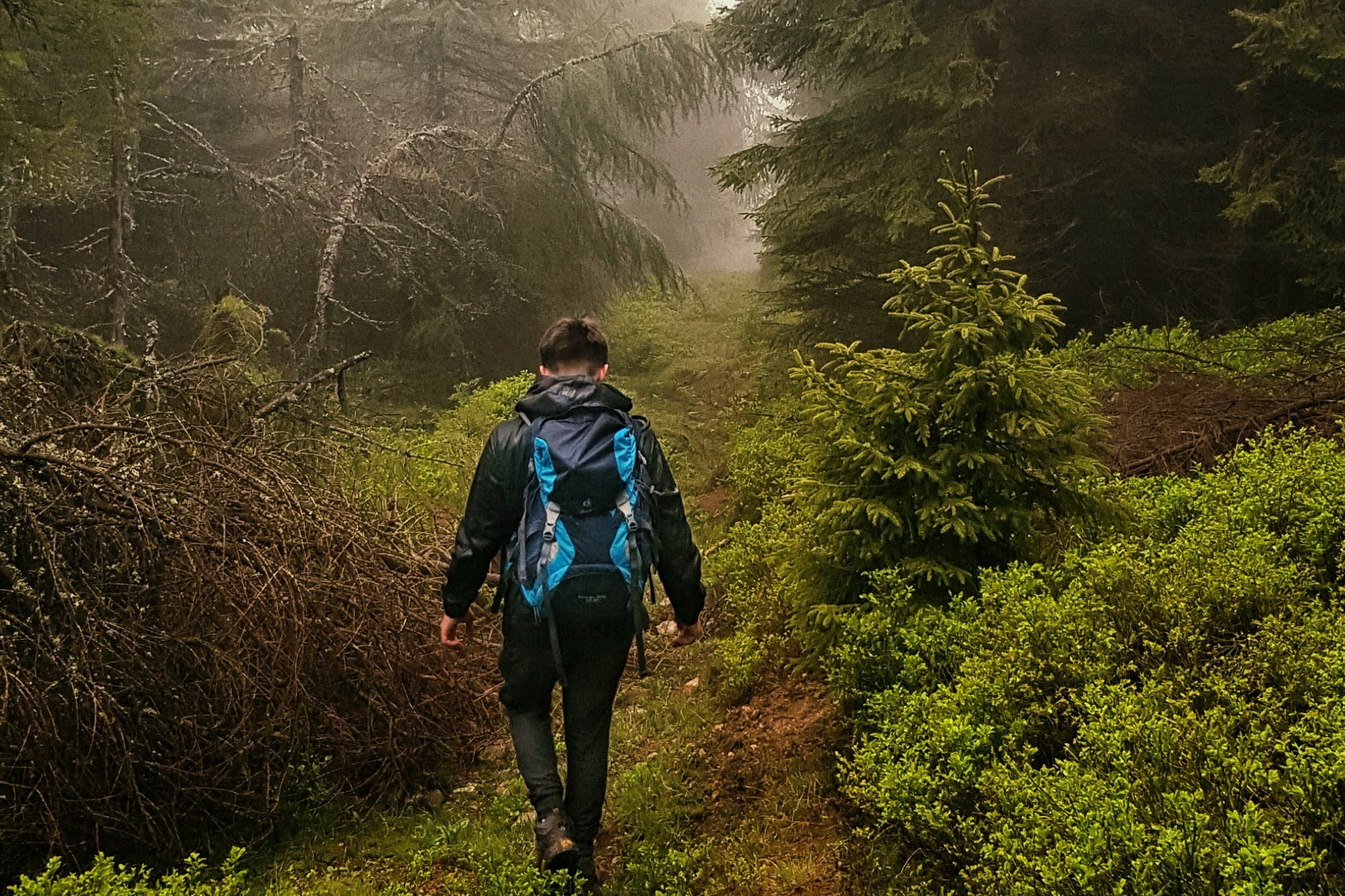
Pictured: Miasme. Photo by Maria Piecha.
Doom mixed with black metal? That’s quite the mix, but Miasme, a Polish solo artist living in the Netherlands, has found a magical combination that blends the two genres in a harmonious and melodic fashion. Each genre has unique elements that distinguish one from another, of course, which lends to this being a very distinct sound. The harshness of black metal and the melancholy of doom appear in almost every thread of Miasme’s latest album, Keep Them at a Distance. It’s strangely captivating.
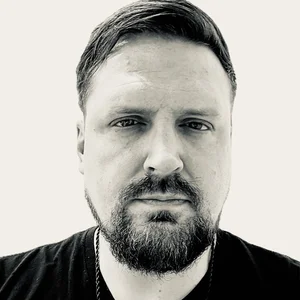
Blacfore is pleased to share this interview with the artist behind Miasme. In this conversation we dive deeper into the artist’s inspiration, their musical journey, and what the music means to them as a person. Enjoy!
First off, thanks so much for taking time to do an interview with us! It’s an honor. Can you start off by telling us where you are based and how long Miasme has been a project of yours?
Hello, and thanks to you too for taking an interest! It’s very flattering. I am a citizen of Poland, but I’ve been living in the Netherlands for over two years now. Miasme has been a thing since the year 2009, I think. At that moment I have been making music for fun for some time already. My first attempts to create my own music started maybe around 2005 after I downloaded the program Guitar Pro in order to learn songs on the guitar. I figured that it can function as sort of a primitive DAW program and started making my own tunes inside it. Funnily enough, this program has stayed an important part of the process for me for a very long time. I used it mainly to program drums in the years to come even after moving to more usual software for most of the recording.
When I made a few tunes which actually sounded decent to me, I figured I could take it a bit further and downloaded my first copy of FL Studio. I fell in love with this software and started spending more and more of my ample free time (I lived in the countryside with not much to do after school) playing with it.
Musically, my biggest fascinations at that time were probably Opeth, Isis, Jesu…but I think the most formative musical find for Miasme was when I came across the EP Le Secret by Alcest. I think this EP is thought to be the first emergence of the “blackgaze” genre. Anyways, as soon as I heard it, I knew I wanted to make something like this. It didn’t seem too difficult to imitate either.
The inspiration ran deep enough that I actually used Charles Baudelaire’s poems as the lyrics for two tracks on Miasme’s first album, exactly like Neige did on the song “Elevation”. The name “Miasme” was a word used in the lyrics of that track too.
So, the first release from Miasme was an untitled album finished in 2010, with a blurry phone photo of a forest nearby my house on the cover art, heavily inspired by Alcest. I find this project very juvenile when I listen to it now. It’s recorded very badly and with some truly terrible vocal attempts. I guess in that sense it does stay in the spirit of black metal the most. But I do think some of the writing still holds up, like the intro on the first song, or the whole last track “Singularity” to which I still treat myself from time to time.
After that, I was releasing some new music each year until 2014 in the form of EPs. My favorite one of these is the one from 2011 called Insight. It sounded much better already, and I think it had some of my best ideas.
The following EPs have leaned more and more into a mellower, post-rock based sound. After making the last one called Perpetual.terminal in 2014, I started losing interest in recording guitar-based music in favor of producing purely electronic tunes. I was inspired by musicians like Holy Other, Lapalux, or Blank Banshee and made some music in that vein, but I ultimately found the process of making music without involvement of instruments not very rewarding.
Around the year 2019 I regained interest in metal music, picked up the guitar again, and in my free time started chipping away at what has finally become my latest album. I figured this was the way in which I could actually express myself way better than by just placing items on a grid and playing with knobs inside of a DAW.
You just released your new album titled Keep Them at a Distance, which is a beautiful blend of black and doom metal. Can you tell us what inspired this album?
In terms of musical inspirations, the most important point is the project The Ruins of Beverast. It’s the only metal band I know which simultaneously has this amount of dense atmosphere, but also, for lack of a better word, a very tangible sense of physicality or motorics. I mean that it’s just heavy as shit and has a very unique approach to rhythm. I think the riff which appears twice in the song “The Failed Exorcism” at around 1:10 is the best example of this. It is very ominous but also has a crushing weight to it. It also has this sort of start-stop dynamic that I think appears in many riffs on Keep Them at a Distance too.
The next important project for Miasme is Leviathan. Again, this man creates music which is extremely bleak but without resorting to simple walls of sound, it has amazing riffs, is very dynamic, and full of contrasts. He pays a lot of attention to the bass parts, not simply repeating what the guitar does all the time but adding additional depth to the compositions with it.
Another one is Blut Aus Nord. Vindsval is a master of atmosphere and melodies, but again he does not make any compromises in the rhythmic department; his drum parts are very intricate and driving. The Memoria Vetusta trilogy is in my opinion an absolute masterclass in cerebral metal music.
An inspiration that came into the picture a bit later was the music of one Damián Antón Ojeda, particularly his black metal project Trhä. This man has an unbelievable ear for melodies and is not afraid to put them front and center within the otherwise quite impenetrable sound of this project. He will also sometimes choose the most tacky, cheap keyboard sounds and somehow make them sound like the voices of angels. I started listening to him when most of the music on the album was already written, but it did inspire me to go a bit bolder with the keyboard patches and make the melodies more upfront.
It may be of significance that each one of these is mostly a one-man operation. Something I think is unique for projects such as these is a sort of a unity of sound. There is no ego of each instrumentalist that would stick out in their playing, but rather all the instruments converge to convey a single idea. This is something I hope to have achieved with Miasme, as well.
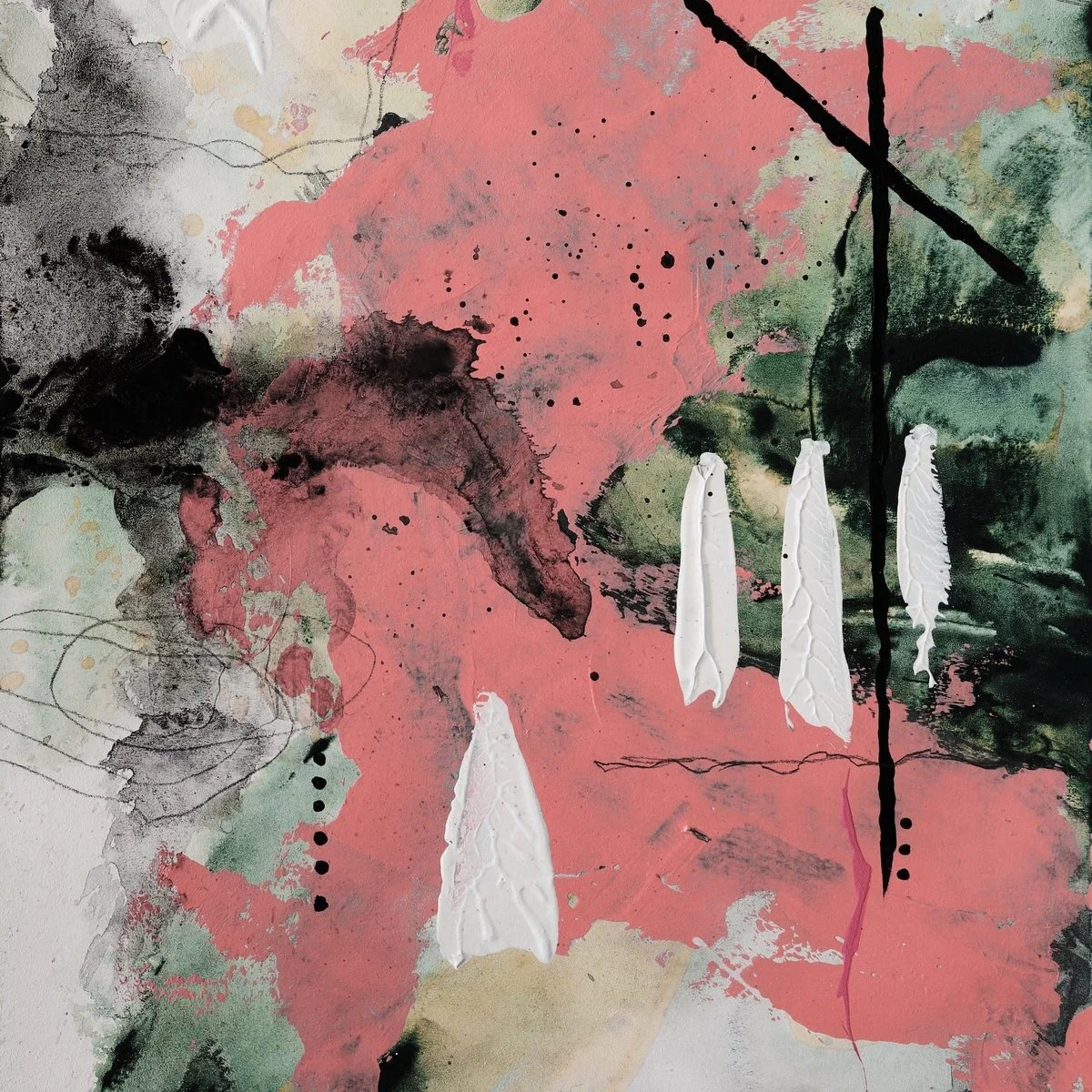
‘Keep Them at a Distance’ by Miasme
How did you come to a unique blend of black and doom? That’s a very distinct, yet complimentary mixture of subgenres.
I agree, it is very complimentary, and I wish there were more artists who mix them. I think my beloved Ruins of Beverast is actually the best example of this fusion.
When creating the album, I did not really think about it in terms of genres. I did not say to myself that I want this music to be a fusion of black, doom, or whatever other type of metal, but I did know that I would like to create music which is full of contrasts, which is sometimes fast, sometimes slow, sometimes ugly, and sometimes pretty. I think this game of contrasts is something that creates some of the most engaging and memorable metal albums.
On my past releases, I did also play a lot with the quiet-loud dynamic, which was a big inspiration I took from post-rock music. But for this album, I decided that I would like it to be about 90% loud, with only short parts to give the listener a bit of a breather. I do think that some quiet parts and ambient interludes make the music more engaging, but having too many of them in metal music can swing it too far to the other side and make the listener phase out during a listen.
In the end, it did come to be something that can be described as a fusion of mostly doom and black metal, precisely because it is undeniably some kind of metal music, and it is sometimes slow and sometimes fast. [laughs]
In Poland, do you find there to be a big black metal and doom scene? Is that a popular subculture?
Black metal is a huge thing in Poland, actually. There are tons of good Polish black metalk bands. The region of Silesia, where my wife comes from, has a particularly big congestion of black metal bands per person. This is a region which for centuries has been the centre of coal excavation. Maybe this has lended itself to the people of the region to make this harsh, sinister music.
Polish black metal bands have quite a distinct sound. It’s hard to put a finger on it, but once you’ve listened to a few of them you should be able to feel it too. What’s also cool is that many of the bands write their lyrics in polish, which has a very different feel to the English language and makes this scene even more unique.
In my opinion the best polish black metal band is without doubt Furia, an exemplar of the Silesian sound. Some other ones which I like are Odraza, Totenmesse, Entropia, and Kriegsmaschine. As much as I love these bands, I don’t feel like Miasme lends to them that much musically though. I did ponder on making my lyrics in Polish, but I decided that I cannot for the love of me write any lyrics in Polish that do not sound cringeworthy. Maybe that’s just because as a native speaker, I’m much more critical of any lyrics which are in this language compared to English ones.
As far as doom metal goes, I don’t think there is much of a scene for it in Poland that I know of. Maybe stoner metal; there seems to be quite an interest in that.
What is your music about exactly? Do you emphasize philosophical, spiritual, or existential elements in the themes?
I did not know this at the time, but I came to realize that this music was, simply put, a way to let out my repressed emotions. I’ve always been a very reserved and restrained person, and even before I learned that this constant need to repress feelings is taking a toll on me, I did subconsciously find a way to express them through this music. I was writing Keep Them at a Distance during a relatively stable, but quite dull and lonely period of my life. I did not have a good way of handling the emotions which were boiling inside me. I know it’s a cliche, but I can say with a straight face that making this album was deeply therapeutic and provided me some much needed peace of mind at the time I was writing it.
The lyrics were one of the last parts of this album that came together. As I was writing the music, I had a few ideas about what to base the lyrics around, but none of them stuck for very long. I had an idea for an environmental angle, something about man-made destruction of the world and how the earth is reborn anew after mankind has perished. This is actually a very similar theme to what I had in mind when making my last EP called Perpetual.terminal. That did not stick for very long though. Ultimately, none of the ideas which I had for the lyrics seemed to connect with the musical substance of this album, they were just completely separate.
When I set out to finally create the lyrics, the music had already been recorded and laying idle for maybe two years. At that moment I became a bit more open as a person and acquired some sort of ability to talk about my feelings. Therefore, I decided that maybe I can just try and make them a sort of translation of my internal dialogue. So, in a way I can say that the lyrics of the songs are trying to put into words the emotions that I felt when writing the music much earlier.
To name some of the themes more specifically, I am talking quite a bit about a feeling of yearning for community with others, but at the same time, being afraid of opening up and having a tendency to avoid interactions with other people. This is a thing which I specifically talk about on the track “Shapes in the Fog,” and I think the name of the album itself alludes to it too.
Another theme is about this lesson which I think is taught to many men, especially in Polish culture, that showing emotions is a sign of weakness, and on the contrary, that it is a virtue to always restrain them and always appear unphased. This kind of programming works only for the select few and makes many of the others miserable and perpetually stressed. The first track on the album, “Radiant Fortress,” is talking about such a figure - a person who tries their best to be an image of stoicism, but will actually fall apart if they were ever to be challenged.
Other than music, what artistic works inspire you?
The biggest non-musical inspiration for this album was the book “The Wind-up Bird Chronicle” by Haruki Murakami. This book, despite taking place in the real world, has a very dreamy and alien feeling to it. Some of the events which happen to the main character are hard to comprehend but utterly fascinating. The track “Arms of the Sun” is based on a story which is told to the main character of this book. In this story, a soldier during the Second Sino-Japanese war is thrown into a dried out well after being captured during a mission. He spends days in this well, waiting for demise in complete darkness. At one moment, the sun positions itself directly upon the well and for a short while bathes him in light. This moment was so touching to me that I decided to base the whole track around it.
There is also a track on the album called, well, “Wind-up Bird.” This one alludes to the title theme of the book. This bird sometimes appears around the protagonist’s house, singing a machine-like song, and according to the character, putting the world around him into motion. The track spins this theme and talks about a lack of agency, a life where things happen around you without your involvement.
A thing which might have been an indirect inspiration for the music were the books of one Thomas Bernhard. His books often portray characters of deeply miserable and troubled men and feature incessant streams of consciousness where they complain about every single thing and person around them, which makes them unhappy. Currently, I find these books hard to bear, but during the time when I was making this music, I found them quite relatable, and easy to sink myself into. There are no direct references to them in the lyrics, but I feel like their atmosphere might have had an influence on the atmosphere of the music somehow.
I guess another inspiration for the album might have been the Dark Souls series of video games. I was playing them all to no end when I was writing this music, and this must have affected my state of mind in some way. There is a reference to the franchise in the first words of the track “Old Father” - “give me cold, give me warm” is something that Snuggly the Crow tells you when you approach him, encouraging you to trade items with him.
Do you plan on having some merchandise available for fans to purchase either on Bandcamp or elsewhere?
There are tape and CD releases in the works. The tape release will be handled by Fiadh Productions, and the CD by a completely new label called Void Bath Records. I was not planning any physical releases at first, but I had the label owners approach me to ask about making the releases which made me extremely happy and appreciated. I do not know the details of when they will be released yet, but I will keep people informed on my social pages as soon as I know the timelines. The CD edition will feature a 16-page booklet, containing many more of my wife’s beautiful paintings.
As far as other merchandise, I have no plans of making it. Fortunately, I do not have any financial incentive for this project, so I don’t have any pressure to produce items attached to the album.
Last question, which is always stupid (sorry, it’s tradition). When looking at Polish traditions, I came across one about the drowning of Marzanna. What in the heck is that all about?
Haha! Yeah, this is a very old Slavic tradition which is supposed to mark the transition from winter to spring. Kids would make a life-sized figure of this character Marzanna - a goddess of cold and winter - out of hay, dress it up and throw it into the water. I might have done this at school once, but frankly, I don’t remember. It’s a bit cruel, especially since Marzanna is a regular polish female name, so it’s not very nice for the real Marzannas out there. Also, throwing trash into water is a big no-no. But apparently, she is also a goddess of rebirth, so maybe it’s all good, she should just resurrect after this, I guess.