Interview: Mythráen
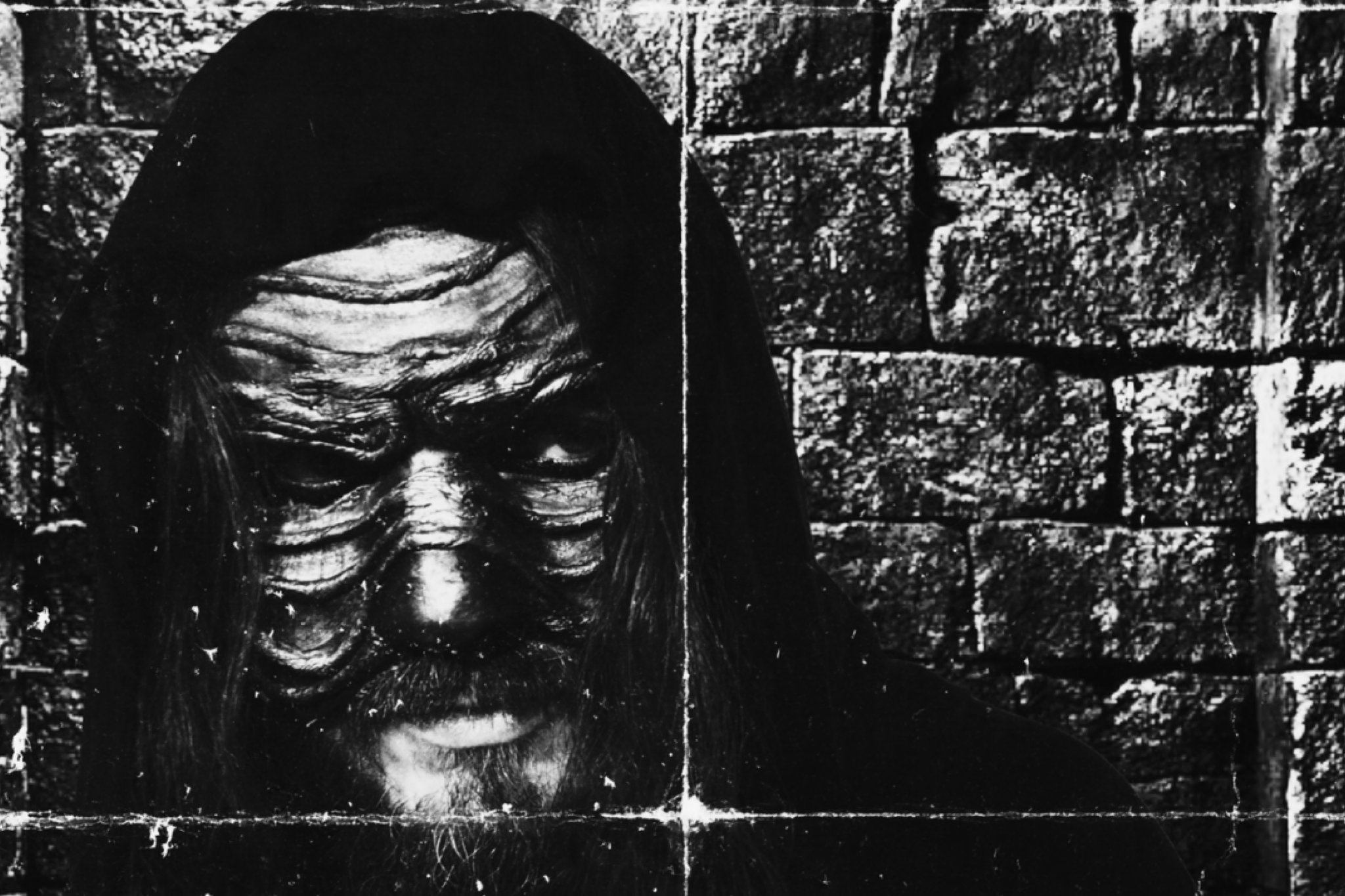
Photo by Mythráen
We recently applauded dungeon synth maestro Mythráen’s new album Wings Beneath Krynn's Moonlight. Despite having little knowledge about the Dragonlance, I found the alumb soaked with wonder, mystery, triumph, and intrigue. It has even piqued my interest in the Dragonlance series. All around, it’s a prime example of what makes dungeon synth great. We had the opportunity to chat with Mythráen about what went into the album, as well as learn more about him and his creative process.
Thank you so much for joining us for an interview! I am a big fan of your recent album Wings Beneath Krynn's Moonlight! We’ll talk more about that later on, but first off, how did you start to get into dungeon synth?
First of all, I would like to thank you from my side for being interested in this interview, I am really flattered.
I think that the first time that I listened to something close to dungeon synth wasn’t by a dungeon synth project but by Satyricon. The bridge and the outro from the Dark Medieval Times were the “baptism of fire” for me, and it was an instant love. I really loved that lo-fi sound, probably because it reminded me of the OSTs of the video games I played as a kid. After that, many other projects came to my path, bands like Mortiis, Summoning, and Nox Arcana, that put the spark in me to search more about this kind of music.
You live in Greece, correct? Do you find that living there influences your music? If so, how?
Greece is a place that has on its roots a great mythology, and a lot of us as kids grew by reading and “living” into this mythology. In fact, my first EP, Χειμῶνος Νύμφη, is a short story I wrote, adapting the myth of the snow that is actually a nymph. Except for ancient mythology, Greece and the whole Balkan region are rich with great folklore that is still vivid in a lot of places here.
Moreover, the environment here: the mountains, the forests, the lakes, the ancient ruins, and everything whispers tales and melodies that can awaken your inner fantasy. Furthermore, Greek folk music is really rich and has always been a great inspiration for me. I think that all those together are a driving power for the creative spirit to express itself through various ways, and my way is music in many spectrums. One of those is Dungeon Synth.
Wings Beneath Krynn's Moonlight is your second album after Χειμῶνος Νύμφη. How have you felt the dungeon synth community has received your music?
Wings Beneath Krynn's Moonlight is about to celebrate its six-month release birthday. The people that have shared their thoughts with me so far are really kind with their words, and show a lot of love about this release, especially the Dragonlance fans. I find it really charming that a lot of people describe the pictures and the feelings I imagined and felt during the creation of this release. It makes me feel like we can communicate on a spiritual level, and this is a huge motivation for me to continue doing this.
I find that you emphasize and explore narrative incredibly well. A lot of dungeon synth can rely on pure atmosphere, but you seem to really work a story into the composition of your work. For example, you have entire paragraphs describing the events your music explores on Χειμῶνος Νύμφη. With Wings Beneath Krynn's Moonlight, you have actual vocal performances. What goes into making the narrative for you?
I’ve always remembered myself feeling deeply connected to musical themes and the stories they had to tell. The soundtracks by John Williams, for example, made me associate the scene I was watching with the musical theme that was playing, and in a magical way, the theme itself seemed to narrate the scene to me. In general, I strongly identify with this musical approach, and somehow, for me, it feels more meaningful to express myself musically through the storytelling of a narrative.
And now to answer the last part of the question, the things that help me in creating the narration, both in stories and lyrics, are pictures in my mind and the feelings they create. Most of the time, my imagination creates still images that contain all of the information I want to express, both in feelings and environment, and I try my best to write this down and find the better words in a row to describe it.
Can you expand on the process of production for Wings Beneath Krynn's Moonlight, both in terms of the album’s overall composition and those vocal performances?
First of all, the starting point was the album’s concept, which was inspired by the song “Under the Trees of Solace.” The title of this song was actually given by my best friend, with whom I share a love for Dragonlance. I originally wrote the piece fourteen years ago, when I was seventeen, but it was never used. I later realized it would fit perfectly with Mythráen, and from there, the idea of creating a Dragonlance-themed album naturally took shape.
After that, I wrote down the key events from the first book that had deeply affected me, and from those, I defined the concept behind each song. Having a clear concept in mind really helped me express myself during the songwriting process.
Regarding the sound design, most of the time I already had an ideal sound for each instrument in my head, and I tried to achieve it through experimentation. As for the vocals in the song “A Dragon’s Lament”, this was actually my first time recording growls and screams and it was pure experimentation. What I had in mind was a dragon facing her final stand, trying to leave behind a grieving testament of her realization. Her emotions were pain, hatred, and anger, and I tried to channel all of that through my voice.
For the chorus, I imagined the prisoners singing to her, trying to soothe her pain, so I wanted that part to sound smoother and more emotional.
In the end, I’m really proud of how the album turned out. I feel it’s very close to what I initially envisioned.
Admittedly, I don’t know a lot about the Dragonlance series. You got me interested in it, though. What made you want to use Dragonlance as the inspiration for this album? What did you want to accomplish in terms of Wings Beneath Krynn's Moonlight’s overall themes, both using Dragonlance and beyond?
Dagonlance Chronicles was the first ever fantasy trilogy I’ve ever read and had a really huge impact on me, not only in how I developed myself in fantasy but also in the creative aspect. Fantasy literature in general played a huge role in who I am right now, and that trilogy was my ticket into it. So, due to the fact that Dragonlance gave so much to me, I had the urge to give something back. Moreover, I think that it has a great lore that fits exactly for the dungeon synth genre.
As for the accomplishment, it’s a feeling / philosophical thought when you first read something in a book, see something in a movie, in a video game etc, that a lot of times cannot be expressed by words. Due to the fact that I was a child when I first read that, there were things that happened that put that feeling into me. My goal was to express that feeling through music so I could communicate it in a more spiritual way.
What artists have influenced your music?
The artists that have influenced me the most on the creation of Mythráen are Summoning, Örnatorpet, Erang, Depressive Silence, Fief, and also soundtrack composers such as Jeremy Soule, Jason Hayes, and David Arkenstone. Moreover, there are also artists that have influenced me in general, such as Mikael Åkerfeldt, André Olbrich, Luca Turrili, Jesper Strömblad that probably subconsciously inspired me in this project as well.
We like to ask each artist about their own worldview, both spiritually and philosophically. Are you spiritual in nature? Do you have a philosophical or spiritual worldview that influences your art?
This is a great question, but I think that if I start talking about it, I’ll never finish. Hahaha.
In short, I believe that as beings we are all connected with the universe and with every other being that is part of it. The spirit, in my view, is energy expressed through our bodies, and when we die, it returns to the universe, probably carrying the experiences it has obtained.
I also believe that everything in the universe was created in a way that maintains harmony over time, and that chaos is a mechanism that helps restore balance whenever harmony is lost.
As for humankind, I believe that our reason for existence is to be the “shepherd” of this planet and to help maintain it during periods of crisis. However, humans, like every other being, have the instinct to impose in order to survive, but also the instinct to mirror the feelings of others, which we call empathy. Empathy can counterbalance the tendency to impose.
Yet, as we grow and live in a system that rewards imposing and punishes empathy in the pursuit of profit and through this survival, this balance is broken, and thus, chaos is created. This chaos, however, will eventually backfire on humankind itself, leading to its destruction, while the balance of the universe will be restored.
From my perspective, if humanity is to survive, there is only one path forward, and is to stop living the way we are living now.
What’s in store for the near future with Mythráen? Any upcoming projects?
During November, the European edition of Wings beneath Krynn’s Moonlight will be released by Dale of Shadows and will contain an extra song, still in the Dragonlance lore. This song was also released as a digital single. Moreover, the concept of the next album is already set, and I will start the composing and production phase as soon as possible.
Final question: outside of Dragonlance, what’s the best depiction of dragons in popular culture in your humble opinion?
Hmmmm, I don’t think that I have the best depiction in my mind for dragons, due to the fact Dragons serve each universe greatly as beings, but I found really interesting their existence in the Dark Souls universe, especially in the first one. I think that I really liked the idea of them being something that lived before Gods in an endless grey forest of clarity and harmony, and the scales made them immortal. I also liked the idea that even in those beings, jealousy and the fear of mortality existed through Seath. Miyazaki approached them with a more philosophical way, as with everything he touches.
As we’ve reached the end of this interview, I would really like to thank you for giving me the opportunity of expressing myself in that way.
I appreciate your willingness to do it and your openness and transparency in sharing everything you’ve mentioned here. It’s been wonderful! Thank you!
